
Air Vessel Tank

An air vessel tank is a critical component used in pipeline and pumping systems to maintain pressure stability and reduce water hammer effects. Vamsy Engineering Co manufactures high-quality air vessel tanks designed for efficient performance in water supply, firefighting, and industrial applications. These tanks act as a cushion by absorbing sudden pressure fluctuations, ensuring smooth flow and protecting pipeline infrastructure.
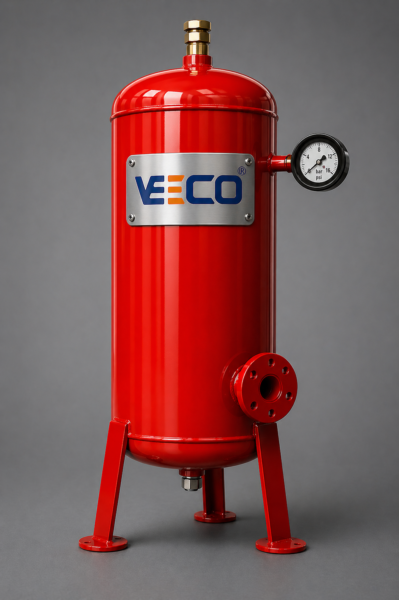
Air Vessel Tank new

Purpose and Function

  • Storage of Compressed Air: The primary function of an air vessel tank is to store compressed air generated by an air compressor. This stored air can be used on demand, reducing the need for the compressor to run continuously.
  • Pressure Stabilisation: It helps maintain consistent pressure in the system by acting as a buffer, smoothing out fluctuations caused by varying demand or compressor cycling.
  • Moisture Separation: As compressed air cools inside the tank, water vapour condenses, allowing moisture to be removed from the system, protecting downstream equipment.
  • Pulsation Dampening: In systems with reciprocating compressors, the tank reduces pulsations in the airflow, ensuring smoother operation.
  • Energy Efficiency: By storing compressed air, the tank reduces the frequency of compressor startups, saving energy and extending the compressor’s lifespan.

Features:

Body – Mild Steel
Size – As Per Requirement, Mfg. All Size
End Connection – Flange End and D/E Class #150
Orientation: Available in both vertical and horizontal configurations.
Working Pressure: Generally rated for 10-15 bar, though some handle up to 20-35 bar for high-pressure systems.

Key Components

Tank Body: Made of robust materials like steel or aluminium to withstand high pressure (typically 100–300 psi or more, depending on the application).
Inlet and Outlet Ports: For air to enter from the compressor and exit to the system.
Safety Valve: A pressure relief valve to prevent over-pressurisation.
Drain Valve: Located at the bottom to remove accumulated water or debris.
Pressure Gauge: To monitor internal pressure.
Mounting: Tanks may be vertical or horizontal, with legs or brackets for stability.

Types of Air Vessel Tanks

Vertical Air Receivers: Space-saving, ideal for facilities with limited floor space.
Horizontal Air Receivers: Often used in larger systems where stability and accessibility are priorities.
Portable Tanks: Smaller, mobile units for applications like tyre inflation or small tools.
Custom Tanks: Designed for specific industrial needs, such as high-pressure or corrosion-resistant applications.

Applications

Industrial Use: Powers pneumatic tools, machinery, and processes in manufacturing, automotive, and construction industries.
HVAC Systems: Used in heating, ventilation, and air conditioning for air distribution.
Medical and Dental: Provides clean, compressed air for medical equipment or dental tools.
Agriculture: Used in irrigation systems or pneumatic seeders.
Automotive: Common in tyre shops and spray painting.

Advantages

Reduces compressor wear by minimising on-off cycles.
Enhances system efficiency by providing a steady air supply.
Protects downstream equipment from moisture and pressure spikes.

Have Queries? Call: +91-9868116725

Our Team is happy to answer your Questions. Contact us, and we’ll be in touch as soon as Possible.

Scroll to Top